

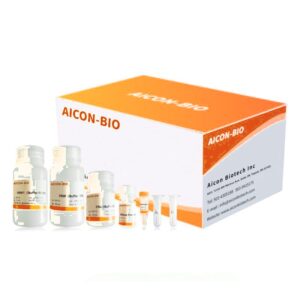
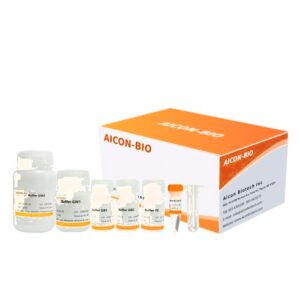
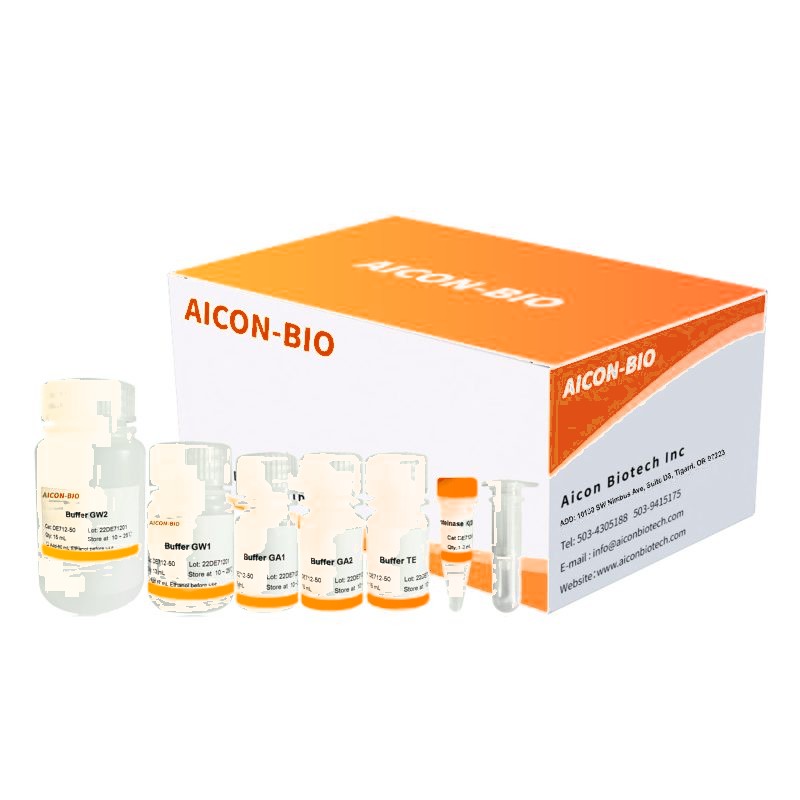
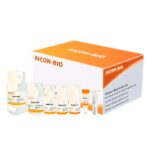
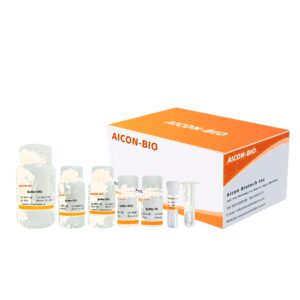
AICON-BIO™ Animal Tissue/Cell/Blood DNA Extraction Kit
$221.00
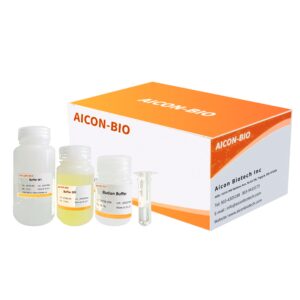
The AICON-BIO™ Animal Tissue/Cell/Blood DNA Extraction Kit rapidly extracts genomic DNA from ≤ 25 mg of fresh or frozen animal tissue (such as rat tail, rat toe or liver), blood and cultured cells.
| Catalog Number | Unit Size |
| AIDE712-50 | 50 preps |
AICON-BIO™ Animal Tissue/Cell/Blood DNA Extraction Kit
The AICON-BIO™ Animal Tissue/Cell/Blood DNA Extraction Kit rapidly extracts genomic DNA from ≤ 25 mg of fresh or frozen animal tissue (such as rat tail, rat toe or liver), blood and cultured cells. An optimized buffer system binds DNA in the lysate efficiently and specifically to a silica spin column. No phenol or chloroform is needed, and the DNA obtained has high concentration and purity.
Key Features
- One kit for animal tissue, blood and cultured cells
- High DNA concentration and purity
- Safe: no phenol or chloroform
- Proteinase K included
Specifications
| Catalog number | AIDE712-50 |
| Unit size | 50 preps |
| Method | Silica spin column |
| Sample | ≤ 25 mg animal tissue, whole blood, cultured cells |
| Preps per kit | 50 |
| Downstream | Restriction digestion, PCR, library construction, Southern blot, molecular labeling |
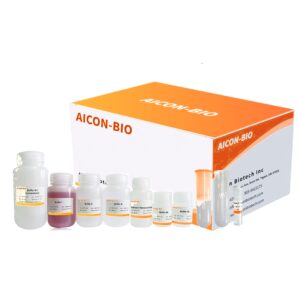
Kit Components
| Component | Amount (50 preps) | Storage |
|---|---|---|
| Buffer GA1 | 15 mL | 0–25 °C |
| Buffer GA2 | 15 mL | 0–25 °C |
| Buffer GW1 | 13 mL | 0–25 °C |
| Buffer GW2 | 15 mL | 0–25 °C |
| Buffer TE | 15 mL | 0–25 °C |
| Proteinase K (20 mg/mL) | 1.0 mL | −20 °C |
| DNA Spin Columns | 50 | 0–25 °C |
| Collection Tubes (2.0 mL) | 50 | 0–25 °C |
Workflow Overview
- Lyse the sample with Buffer GA1 and Proteinase K at 56 °C.
- Add Buffer GA2, mix, and load the lysate onto the DNA spin column.
- Wash with Buffer GW1 and Buffer GW2.
- Elute genomic DNA with Buffer TE.
See the user manual supplied with the kit for the full protocol.
Storage
Proteinase K: −20 °C. All other components: store dry at 0–25 °C; shelf life 12 months.
Troubleshooting (Q&A)
Q1: Why are the columns clogged?
1) Too much sample is used. Especially for DNA-rich tissues, it is necessary to reduce the amount.
2) The sample was not sufficiently lysed or ground and overnight digestion is recommended for rat tail tissue.
Q2: Why is the DNA yield low?
1) Insufficient sample lysis process. If the sample is excessive, reduce the amount of sample appropriately, extend the incubation time at 56˚C, or add 20 µL Proteinase K (20 mg/mL) to digest in step 2.
2) The amount of sample is too small.
3) The quality of the sample material is not good.
Q3: Why are downstream experiments affected by RNA?
No RNase A digestion was added or the RNA content in the sample is too high(the amount of RNase A can be appropriately increased or the digestion time can be extended).
For research use only. Not for use in diagnostic procedures.
Only logged in customers who have purchased this product may leave a review.
Related products
Reviews
There are no reviews yet.